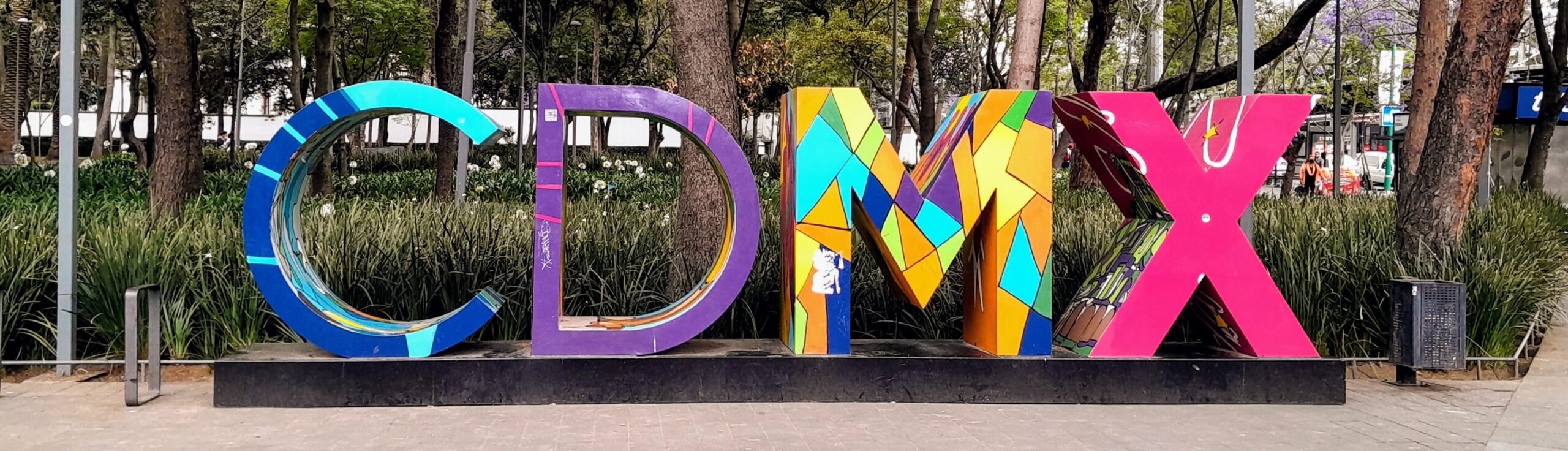

Each year a small portion of AoIR conference fees go toward several Kelly Quinn Travel Scholarships for junior scholars to attend the conference. We want to recognize our scholarship recipients and share with you a little bit about them and their research interests.
Who are you?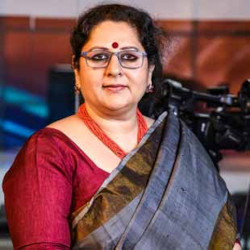
My name is Gauri Durga Chakraborty and currently, I serve as Professor at Times School of Media, and Chairperson of the University Women Development Cell, Bennett University. I graduated from Asia’s premier institution, Film and Television Institute of India, Pune and have been a part of the Audio-Video Industry in India since 1995. I am a practicing filmmaker, academician and artist. I have been a media educator for the last 20 years including spearheading a journalism and media department and community radio station. I was Festival Director for the IAWRT Asian Women’s Film Festival 2019 and 2023. I am Editor of the book, Balancing the Wisdom Tree- An Anthology of FTII’s Women Alumni. Recently, I received the Australia Award Fellowship from the Department of Foreign Affairs and Trade (DFAT) hosted by Western Sydney University (2024-25).
Where are you from?
I am from India and come from a multicultural background with roots in North India, early years spent in west of India and married to a family from eastern side of the country.
What is your current area of study?
My area of study lies at the intersection of gender and film, with a particular focus on how agency is represented across traditional and contemporary media. I am deeply intrigued by the ways in which technology, transnational storytelling, and contra-flows within culture shape screen media, especially within the rapidly evolving landscape of OTT platforms.
Describe the research you will present at AoIR2025.
At AoIR 2025, I am part of the Roundtable titled, ‘Violence Against women: representation in streaming fictional content in the Global South.’ Curated by Prof Clarice Greco from Paulista University (Brazil), my co- panelists are Giuliana Cassano, Pontificia Universidad Católica del Perú (Perú), Lorena Antezana, University of Chile (Chile) and Tomaz Penner, Mackenzie University (Brazil)
Brazil, India, Peru and Chile are examples of countries from the Global South with media and entertainment industries having considerable influence on popular culture and society. This roundtable aims to create a space for discussion around how TV fiction on streaming platforms plays an important role in representing gender violence throughout the globe. Video on demand OTT services have altered distribution and consumption of televised content and challenged stereotypes. The discussion aims to probe into the global and local contexts of audiovisual production in a context of oppression and gender injustice in the Global South. The narratives that circulate worldwide can challenge the notion of universality within portrayal of gender in episodic formats.
Have you presented at AoIR in the past? If so, what was your experience? If #AoIR2025 in Niterói is your first AoIR conference, what made you choose this conference? What do you expect from it?
The mission and community of AoIR resonate with me as they foster critical and scholarly research that extends beyond traditional disciplinary boundaries. This aligns closely with my work, which intersects technology, sociology, and global transnational storytelling as mediated through digital communication platforms though media and film. The fact that AoIR is a platform where research exists across academic borders, allows for more collaborative efforts with like minded researchers from across the globe.
I am excited to be at AoIR 2025 Ruptures as it will help me interact with scholars from across the globe on critical issues of creative industries and digital consumption patterns. The prominence of BRICS as a soft power entity from the Global South, with its embedded cultural diplomacy, promotes alternative global narratives and offers a unique perspective on how technology-supported global production ecosystems are converging with audiences across geographical borders and evolving identity formation.