
Each year a small portion of AoIR conference fees go toward several Kelly Quinn Travel Scholarships for junior scholars to attend the conference. We want to recognize our scholarship recipients and share with you a little bit about them and their research interests.
Who are you? 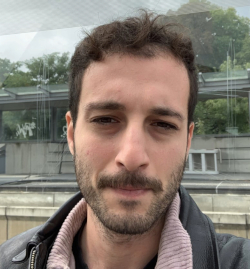
I am Ilker Bahar, a PhD candidate in the Department of Media Studies at the University of Amsterdam.
Where are you from?
I am originally from Türkiye, from a small town in the Black Sea region. But I came of age in Istanbul, where I attended a boarding high school and completed my undergraduate studies.
What is your current area of study?
Currently, I am conducting ethnographic research on VRChat, a popular social virtual reality platform where users present themselves as avatars and interact with others in 3D digital environments. Specifically, I am exploring the kinds of identities and forms of intimacy that users craft in these spaces through diverse avatar aesthetics and mechanics. More broadly, my research interests lie at the intersection of new media, digital cultures, gender, intimacy, and sexuality, with a particular focus on how these dynamics manifest in emerging technologies such as virtual reality (VR), augmented reality (AR), and artificial intelligence (AI).
Describe the research you will present at AoIR2025.
At AoIR 2025, I will present my paper titled: “Rupture and Glitch in Pleasure: Exploring Erotic Roleplay in Virtual Reality.” This work draws on my ethnographic research in VRChat, where I engaged with erotic roleplay communities by attending parties, striptease shows, and lewd gatherings, as well as conducting interviews with participants from diverse backgrounds. My fieldwork revealed that diverse avatars, by distancing users from their habitual selves, create ruptures from normative frameworks of intimacy and sexuality. For example, a heterosexual cis-male participant in his 60s presents as genderfluid and derives pleasure from dancing erotically in front of crowds, while a heterosexual couple swaps genders, switches roles, and engages in “size play” to explore pleasures not possible offline. Others adopt non-humanoid or fantastical avatars to engage in erotic practices that transcend penetrative or phallocentric forms of sexual expression, moving beyond frameworks focused solely on orgasm or procreation. Drawing on queer theory and glitch feminism (Russell, 2020; Sundén, 2015), I argue that these disruptions can subvert normative assumptions around sex, intimacy, and the body. With this, my work contributes to scholarship on mediated intimacy and sexuality by highlighting the queer political potential of ruptures and glitches in erotic roleplay. I aim to showcase how these emergent practices in social VR platforms can cultivate meaningful, enriching, and liberatory connections.
Have you presented at AoIR in the past? If so, what was your experience? If #AoIR2025 in Niterói is your first AoIR conference, what made you choose this conference? What do you expect from it?
This will be my first time presenting at AoIR, and I am truly excited for the opportunity. AoIR is such a well-recognized and prestigious conference in critical media studies, bringing together hundreds of scholars from diverse backgrounds. I think being part of this kind of intellectual environment is incredibly important not only to receive constructive feedback on my work, but also to exchange ideas, learn from other scholars’ current research, and engage in conversations that can help shape and refine my own thinking. As an early-career scholar, this is also a unique opportunity to expand my professional network and form connections that could develop into meaningful collaborations in the future. I am particularly looking forward to connecting with scholars working on areas that intersect with my own research interests, including mediated sociality and intimacy, the digital transformation of femininities and masculinities, and changing norms of flirting and dating.