AoIR2026
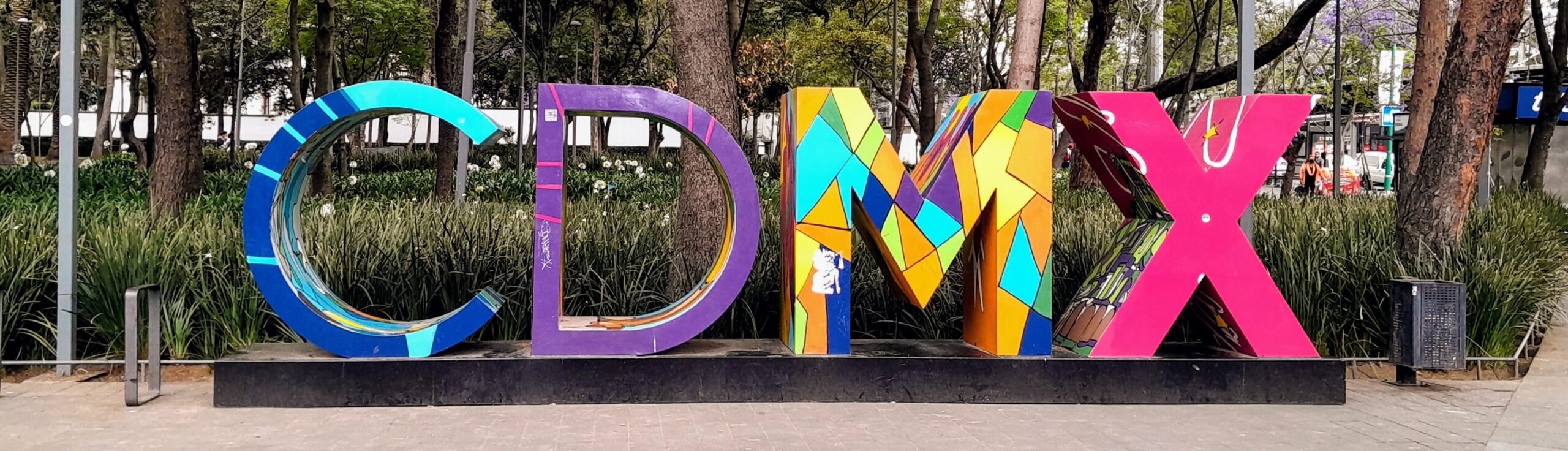
We are thrilled to be in Mexico City, Mexico for AoIR2026! Please see here for the full call for proposals and below for more information about guidelines.
Submission Format and Logistical Information
Overview
#AoIR2026 will be held at the Hyatt Regency hotel in Mexico City, from October 14th to 17th 2026. It will also be AoIR’s second bilingual conference, after last year’s successful piloting in Niteroí, Brazil. To continue with expanding participation cross-culturally, we will offer opportunities for a number of papers and panels to be presented in Spanish. Please note: This year’s conference will offer opportunities for hybrid participation for keynote and plenary viewing only. The conference will not offer regular sessions or presentations from persons not in attendance at the conference. AoIR2026 will provide opportunities for remote participation for the Doctoral Colloquium and Early-Career Researcher Workshop. There will also be on-site Doctoral Colloquium and Early-Career Researcher Workshop sessions offered on 14 October in Mexico City/CDMX.
Bilingual Participation: Spanish and English
We will accept a limited number of proposals to be presented in Spanish, for a few selected spots (which will have simultaneous translation into English). These proposals, however, must be submitted in English for the review process. The bilingual presentation is restricted to papers, panels, roundtables, and fishbowls. When submitting your proposal, you will be asked if you would like to present in English or in Spanish. If your proposal is a panel, fishbowl, or roundtable with multiple languages, you must choose only one language for the entire group. The choice you make at this stage will be binding, and you will not be able to change it, as the burden in terms of rescheduling will be too onerous. As there will be fewer spots for these presentations because of the need to provide simultaneous translation, you may be accepted but asked to present in English.
Reviewers will not know whether you are proposing to present in English or Spanish, and this will not impact how your paper is reviewed.
Doctoral Colloquium and Early-Career Workshop
As noted, two of our core events will run in both face-to-face and online versions: the Doctoral Colloquium and the Early Career Researcher (ECR) workshop. Submissions for both modes of the Doctoral Colloquium are open as of the opening of the CFP. As with our other preconferences, calls for participation in both modes of the ECR event will be distributed shortly after conference acceptance notifications.
Submission Types
Paper Proposals
Panel Proposal
Fishbowl
Roundtable Session
Experimental Session
Preconference Workshop
Doctoral Colloquium
Overview
Accepted paper and panel submissions will be included in our open-access conference paper archive, Selected Papers of Internet Research (SPIR). SPIR helps us further publicize the work of our members and introduce our research to a wider audience. All submissions must therefore follow our SPIR formatting requirements, which include a consistent header and style format for the papers that will enable people to easily locate author and title information, identify the papers as part of the AoIR conference. This format is only intended to bring consistency to basic elements (such as typeface and spacing), not to impose any disciplinary constraints. You can download a Word template here.
To learn more about how submissions are reviewed, please read this. We strongly encourage and welcome all conference participants to serve as conference proposal reviewers. This participation ensures a diverse review pool and an equitable distribution of labor, expertise, and perspectives. If you are unable to review, please choose to opt out during your registration process in ConfTool. All paper submissions are double-anonymized peer-reviewed.
In the interest of diversity and collegiality, each conference participant is limited to presenting a maximum of two papers (either as standalone papers or as parts of a panel or one of each; fishbowls, experimental sessions, and roundtables are not counted against your maximum of two presentations). You can be a co-author on additional papers, but you must not be the scheduled presenter of these papers. Please do not submit as a presenter for any more papers than this, to allow everyone an opportunity to participate in the conference.
When submitting, please read the submission categories and topics carefully. You will be asked to select up to two methods and two topics that best suit your submission, and we will use this to match your paper to the most appropriate reviewers. We recognize that not all topics and methods are included, but please do your best to label your submission as accurately as you can.
If you have any questions about the submission process, please email AoIRConfChair@aoir.org. We look forward to receiving your proposals.
Paper Proposals
Paper submissions should articulate the issue or research question to be discussed, the methodological or critical framework used, and indicate the findings or conclusions to be presented and/or the relevance to wider conference themes. Papers can present any kind of research, analysis, or theoretical framing, but should be written so that the importance of the work can be understood by reviewers working in different disciplines or using different approaches. Cross- or trans-disciplinary work is especially encouraged.
Paper submissions must be made in the form of 1000-1200-word extended abstracts (this word count does not include the bibliography). Submissions must adhere to AoIR’s pre-formatted template and should demonstrate the rigor and relevance of the work. Further, in addition to the extended abstract document, you will also be required to enter a brief abstract of 250 words in the ConfTool website, which will be used to list your panel in the conference program. Paper submissions should not include the names of authors; all paper submissions are double-anonymized peer-reviewed.
In the interest of diversity and collegiality, each conference participant is limited to presenting a maximum of two papers (either as standalone papers or as parts of a panel or one of each; fishbowls, experimental sessions, and roundtables are not counted against your maximum of two presentations). You can be a co-author on additional papers, but you must not be the scheduled presenter of these papers.
- Presented, non-anonymized, final version of the extended abstract must be uploaded by 20 November 2026.
- ALL presenting authors must be registered by the Early Registration Deadline of 1 August 2026
- Submission deadline for Papers – March 1st, 2026
Preconstituted panels
Panels should present a coherent group of four or five papers on a single theme. Panel submissions must include a 1000-1200-word extended abstract for each of the constituent papers in the standard AoIR paper submission template (this word count does not include the bibliography). The panel organizer is responsible for compiling the extended abstracts for each constituent paper into one single document for submission, and must add a brief introductory statement (600-800 words; this word count does not include the bibliography) articulating the papers’ relationship to each other. This statement should outline the overall rationale for the panel. Keeping in mind the interdisciplinary nature of this conference, you should provide enough explanation of your approach to give reviewers with different backgrounds an understanding of the rigor and relevance of the work. Finally, in addition to this document collecting the introductory statement and the four or five extended abstracts, you will also be required to enter a brief abstract of 250 words in the ConfTool website, which will be used to list your panel in the conference program. Panel submissions should not include the names of participating authors or panel convenors; all panel submissions are double-anonymized peer-reviewed.
In the interest of diversity and collegiality, each conference participant is limited to presenting a maximum of two papers (either as standalone papers or as parts of a panel or one of each; fishbowls, experimental sessions, and roundtables are not counted against your maximum of two presentations). You can be a co-author on additional papers, but you must not be the scheduled presenter of these papers.
- Presented, non-anonymized, final version of the extended abstracts compilation must be uploaded by 20 November 2026.
- The presenting authors of ALL papers in the panel must be registered by the Early Registration Deadline of 1 Aug 2026
- Submission deadline for Panels – March 1st, 2026
Preconference workshops (14 October 2026)
Workshops may be either half or full-day events that occur on the first day of the conference and focus on a particular topic. They may be a workshop of some kind (e.g., a publishing workshop), a methodological “bootcamp” (e.g., on ethnography or statistical analysis), an exploration of a theoretical tradition or topical area (e.g., symbolic interaction, political economy, or GIS) or anything else that may be of interest to conference delegates. Proposals for workshops should explain for a general scholarly audience the goals of the workshop, the way it will operate, and an indication of potential audience or attendees who may be interested in attending (such as “early career scholars” or “researchers using statistical analysis”). They must also indicate clearly whether they are half-day (three hours) or full-day (six hours) events.
Proposals for workshops should be approximately 600-800 words in length (to be submitted as an “abstract” in the ConfTool Website: no separate document needs to be uploaded). They should name the facilitators and participants; while the reviewers will be anonymous, the quality and expertise of the facilitators and other participants will be recognized in the assessment. The availability of individuals named as facilitators and panelists in workshop sessions must be confirmed by the time the proposal is submitted. Workshop proposals should indicate any special requirements, especially including any upper limits on the number of participants. All workshops must take place on-site at the conference venue, and they must be open to all conference delegates, without a separate application process.
- All workshop facilitators must be registered by the Early Bird Registration Deadline of 1 August 2026.
- Submission deadline for Preconference Workshops – March 1st, 2026
Roundtable Sessions
Roundtables encourage discussion and interaction among delegates. They may involve brief introductory presentations by organizers. Proposals should include details on the theme or topic of discussion and its relevance, along with names of the organizers and initial participants. Roundtables can include no more than five initial participants. We stress that this format is not appropriate for submitters wishing to present papers. In such instances, the panel format is the one to choose.
Roundtable submissions should be between 250-300 words long (to be included as the “abstract” in the submissions process: no separate document need be uploaded). Only the reviewers are anonymous; the quality and expertise of the organizers and initial participants will be recognized in the assessment. The availability of individuals named as organizers and initial participants in roundtable sessions must be confirmed by the time the proposal is submitted.
- All initial participants must be registered by the Early Bird Registration Deadline of 1 August 2026
- Submission deadline for Roundtables – March 1st, 2026
Fishbowls
Fishbowl sessions should cover broad topics of interest to a wide segment of the AoIR community, and create a space for dialogue across different types of research. Submitted proposals should include a brief statement on the core idea or theme for the fishbowl, emphasizing its relation to the conference theme or its relevance to the AoIR community. Fishbowls can include no more than five initial participants, who should be named in the proposal. (Please visit this information page to make sure you understand how a fishbowl session works before submitting.)
Fishbowl submissions should be between 250-300 words long (to be included as the “abstract” in the submissions process: no separate document needs to be uploaded). Only the reviewers are anonymous; the quality and expertise of the organizers and initial participants will be recognized in the assessment. The availability of individuals named as fish in fishbowl sessions must be confirmed by the time the proposal is submitted.
- All fish must be registered by the Early Bird Registration Deadline of 1 August 2026.
- Submission deadline for Fishbowls – March 1st, 2026
Experimental Sessions
Experimental sessions are those that, while of interest to members or engaging with conference themes, meaningfully “push the envelope” beyond more traditional forms of conference engagement and participation and as such do not fit into any of the other proposal formats. Examples may include Ignite or Pecha-Kucha presentations, demonstrations, performances, installations, short-form workshops, unsessions, maker or code-based projects, or interactive experiences. If you are unsure as to the fit of your experimental session, we encourage you to reach out to the program chairs (AoIRConfChair@aoir.org) to discuss your ideas, especially if you feel that your experimental session might not fit in a regular 90-minute slot. Sometimes, for instance, a half-day preconference workshop might be a better format. We’ll be happy to think this through with you.
Proposals for experimental sessions should be between 300-500 words long (to be included as the “abstract” in the submissions process: no separate document need be uploaded; if the proposal includes citations, the bibliography will not count towards the word limit). They should describe for a general scholarly audience the goal or idea of the session and how it will operate, and discuss why the proposed format will be of interest to AoIR delegates. Organizers of experimental sessions will be responsible for supplying any necessary equipment beyond that usually provided for conference presentations, and should be prepared to coordinate closely with the conference committee as necessary to enable a successful presentation of the alternative format. They are reviewed by the programme chair and conference committee in order to ensure their feasibility in the local setting of the conference.
- All named facilitators of an experimental session must be registered by the Early Bird Registration Deadline of 1 August 2026
- Submission deadline for Experimental Sessions – March 1st, 2026
Doctoral Colloquium
The Association of Internet Researchers believes that its emerging researchers are the best in its disparate constituent fields. In keeping with its commitment to students’ scholarship, we continue the tradition of bringing emerging and established scholars together through the #AoIR2026 Doctoral Colloquium. The colloquium offers PhD students working in internet research or related fields a special, day-long forum, to be convened on 14 October 2026 in Mexico City/CDMX, or an online event for those who cannot attend the in-person conference. For many years, this pre-conference event has provided students with the opportunity to spend a concentrated amount of time with senior scholars to share research projects, address methodological and theoretical challenges, and exchange informal advice on juggling the multiple pressures associated with job searching, publishing, and finishing the dissertation.
Interested students should prepare a) a two-page summary of their research. This should provide a context for the research, describe the methods being used, the progress to date, and primary concerns and issues; and b) a brief statement indicating why they want to participate in this doctoral colloquium and what they hope to get out of it. In the brief statement, please clearly identify where in their program the student is. Students should not yet hold a Ph.D. at the time of participation.
When submitting, please select either the In-person Doctoral Colloquium or Online Doctoral Colloquium.
- Submissions to the Doctoral Colloquium must specify in-person or online
- This decision cannot be changed
- Submission deadline Doctoral Colloquium – May 1st, 2026
Contact Information
Please address any questions to the Program Chair, Dr. Stacy Wood, University of California, Los Angeles (UCLA) via email: AoIRConfChair [at] aoir [dot] org.