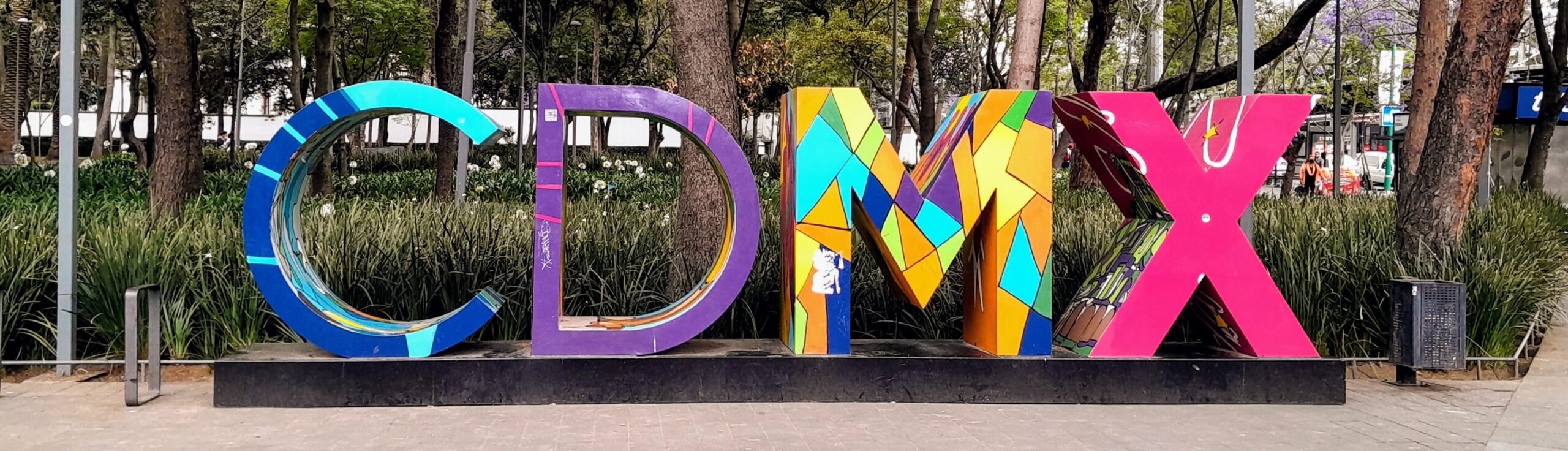
AoIR2025 Keynote
The conference program is available here: https://www.conftool.org/aoir2025/sessions.php
Keynote
When: 15 October 2025, 18:00 Brasília Time (BRT)
Where: Oscar Niemeyer Popular Theater. The event will be live streamed. Details to follow.
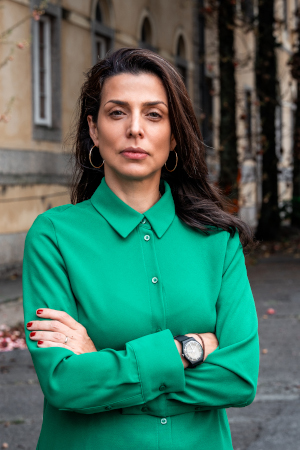
R. Marie Santini, School of Communication, Federal University of Rio de Janeiro (UFRJ), is the founder and director of NetLab – Laboratory for Internet and Social Network Studies, at the Federal University of Rio de Janeiro. NetLab researches the phenomenon of digital disinformation and its social consequences to inform public policies that promote ethics in governance, transparency, and integrity of digital media in Brazil. Marie is a CNPq Research Fellow, an Associate Researcher at the European Centre of Excellence VOX-Pol; a member of the expert committee of the International Observatory on Information and Democracy (OID); and a researcher on the Scientific Committee of the International Panel on the Information Environment (IPIE).
The Digital Break: When Big Tech (re)Fused the Global North and South.
The regulation of Big Tech companies has become one of the most central geopolitical, economic, and social issues in Western countries. These corporations have intensified their efforts in lobbying, attacking researchers, engaging in commercial and constitutional violations, disregarding local laws, and abusively collecting personal data, all while profiting from fraudulent advertising. This has caused significant harm to their users, especially in the Global South. Such actions largely aim at two major objectives that together ensure the perpetuation of their hegemonic powers: maximizing profits and preventing any type of regulation, whether local or global. Brazil has played a significant role in attempting to create the conditions of possibility for Big Tech’s regulation in the Global South. Here, the political confrontation has taken the form of hard disputes in public opinion over media outlets. It has also involved the judiciary through the Brazilian Supreme Federal Court, the executive branch through the government, as well as provoking strong engagement in academia and civil society to produce evidence and advocacy on this issue. Nonetheless, the Global South faces additional and more severe challenges in confronting Big Tech: beyond a colonial extractivist posture by these North American companies, which typically have used Brazil as a laboratory, researchers still have to contend with a lack of data, reduced transparency and limited funding for research. Nevertheless, the strategic political and economic approach of Big Tech, characterized by non-compliance with laws and alliances with authoritarian governments attempting to shut down research, has caused instability worldwide, in both the Global North and South, for those who work with empirical research, social data science, and the social impacts of Big Tech. For the Global North, this conjuncture of data deserts and resource scarcity may represent a rupture in established dynamics; for the Global South, it is a continuation of pre-existing challenges. This reality, nonetheless, places both the Global North and South before common obstacles, which can generate opportunities for new research perspectives and for robust global academic and civil society articulation in confronting Big Tech worldwide.
Plenary Panel
When: 16 October 2025, 18:00 Brasília Time (BRT)
Where: Oscar Niemeyer Popular Theater. The event will be live streamed. Details to follow.
Ruptures from the South: Internet Research Histories
We are excited to bring together this amazing panel for AoIR2025.
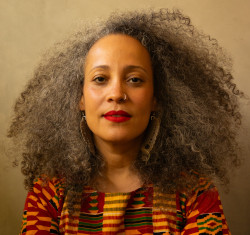 Fernanda Carrera is a Professor at the School of Communication at the Federal University of Rio de Janeiro (UFRJ). Research Productivity Fellow – Level 2 at CNPq and Young Scientist of Our State – FAPERJ. Professor in the Graduate Program in Communication and Culture at the Federal University of Rio de Janeiro (UFRJ) and in the Graduate Program in Communication at the Fluminense Federal University (UFF). Vice-coordinator of the Working Group on Communication, Race, and Intersectionalities at COMPÓS – the National Association of Graduate Programs in Communication. Leader of the research group LIDD – Laboratory of Digital Identities and Diversity (UFRJ).
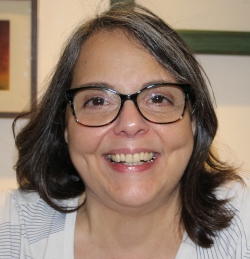
Suely Fragoso is a full professor in the Postgraduate Program in Communication at the Federal University of Rio Grande do Sul (UFRGS/Brazil) and a CNPq fellow. She has created and currently coordinates UFRGS’ Digital Artifacts Laboratory (LAD/UFRGS). She has participated in AoIR conferences since 2003 and was elected AoIR Open Chair for the 2008-2009 Executive Committee. Her current research interests include digital materialities, digital fiction, disinformation, conspiracy theories, and games.
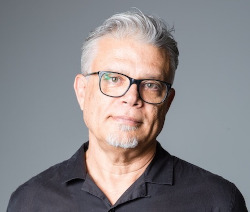 André Lemos, a pioneer in digital culture studies in Brazil, holds a PhD in Sociology from Université René Descartes, Paris V, Sorbonne (1995). He is a writer and a Full Professor at the Federal University of Bahia (UFBA) School of Communication, a full member of the Bahia Academy of Sciences, and a CNPq research fellow. Lemos has authored over 15 academic books and 5 fiction works.
 Paola Ricaurte is a full professor at Tecnológico de Monterrey and a faculty associate at the Berkman Klein Center for Internet & Society at Harvard University. She is the co-founder of Tierra Común, a network committed to decolonizing data, and leads the Latin American hub of the Feminist AI Research Network. Her work bridges academia, activism, and policymaking, with a central focus on human rights from decolonial and feminist perspectives. She serves on several international expert committees, including the Global Partnership on AI (GPAI), UNESCO’s AI Ethics Experts Without Borders (AIEB), and the Women for Ethical AI (W4EAI) platform.